
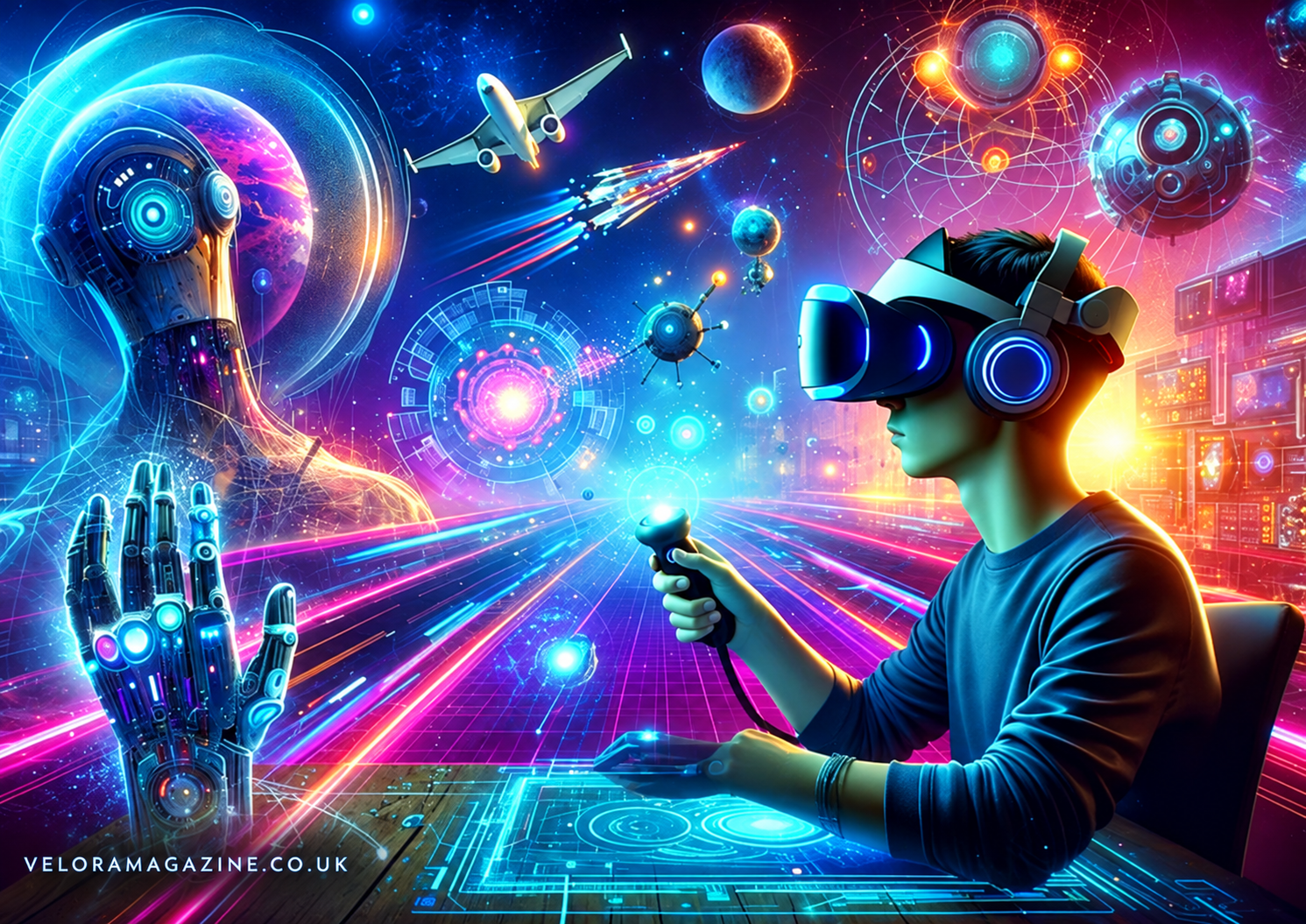
Video games have always followed technology. Every major leap, from 3D graphics to online multiplayer, changed how studios plan, build, and release their projects. Today artificial intelligence is driving the next big shift, and it is reaching almost every stage of game development, from early concept art to final bug testing.
This change is not only about flashy tools that generate pictures or text. It is about how teams save time, how worlds become more reactive, and how smaller studios compete with larger ones. Understanding why AI is changing the way games are made helps players, developers, and curious readers see both the promise and the problems that come with it.
Why AI Is Changing the Way Games Are Made Means in Modern Game Development
When people hear “Why AI Is Changing the Way Games Are Made,” they often think of two different things. The first is the classic game AI that controls enemies, allies, and traffic in a game world. This kind of AI has existed for decades and uses rules, pathfinding, and decision trees. The second is newer: machine learning and generative AI, which can create images, code, dialogue, music, and animation based on patterns learned from large amounts of data.
The second kind is what is changing production workflows. Major engines such as Unity and Unreal Engine have added AI-assisted features, and large companies like Ubisoft, Electronic Arts, and NVIDIA have published research and tools around machine learning. Surveys shared at industry events such as the Game Developers Conference show that a growing share of developers now use some form of Why AI Is Changing the Way Games Are Made work, though opinions about it remain mixed.
It helps to remember that AI is a tool and not a replacement for creative vision. A game still needs designers who understand fun, writers who understand story, and artists who understand style. AI changes how quickly ideas move from a rough thought to something playable, and that speed is the main reason studios are paying attention, Why AI Is Changing the Way Games Are Made.
Faster Prototyping and Asset Creation
Prototyping is where many games succeed or fail, and it has traditionally been slow and expensive. Building a rough level, a placeholder character, or a sample soundtrack can take days. With AI-assisted tools, designers can now generate concept art, rough 3D models, textures, and temporary voice lines in a fraction of that time. This lets a team test several ideas early instead of committing to one direction too soon.
Asset creation is also changing. Tasks that once required long manual work, such as texture upscaling, background cleanup, rigging help, and animation cleanup, can now be partly automated. Artists often describe these tools as a first draft machine. The Why AI Is Changing the Way Games Are Made offers a starting point, and a skilled person then refines, corrects, and gives it the final style that fits the game.
This does not mean every AI-made asset is ready to ship. Studios that handle this well treat generated content as a rough layer and keep human review in the loop. Quality control, consistent art direction, and legal checks on training data are still essential, and teams that skip them often end up with work that feels generic or raises copyright questions.
Procedural Content Generation Gets Smarter
Procedural generation is not new. Games like Rogue, Minecraft, and No Man’s Sky have long used algorithms to build maps, planets, and dungeons. What is changing is how intelligent these systems are becoming. Instead of random placement based on fixed rules, newer machine learning approaches can learn what a good level looks like and create layouts that feel more balanced and purposeful.
For players, this can mean worlds that feel less repetitive and more personal. A Why AI Is Changing the Way Games Are Made could adjust enemy placement, loot, or level structure based on how someone plays. For developers, it reduces the burden of hand-building every corner of a huge open world, which is one reason modern open-world games keep growing in scale without always requiring larger teams.
There is a catch, though. Content that is generated endlessly can feel empty if there is no strong design behind it. Players tend to remember handcrafted moments, memorable characters, and carefully paced levels. The best results come from mixing procedural tools with human design, so that the AI fills in space while designers shape the experience that matters most.
Smarter NPCs and More Believable Worlds
Non-player characters are one of the most visible places where Why AI Is Changing the Way Games Are Made could change gameplay. Traditionally, NPCs repeat scripted lines and follow limited routines. Newer tools aim to let characters respond more naturally to what the player says or does, remember past events, and react to changes in the world. NVIDIA, for example, has demonstrated its ACE technology, Why AI Is Changing the Way Games Are Made, which combines speech recognition, language models, and facial animation to power conversational characters.
Studios are also experimenting with AI-assisted writing for minor dialogue, often called barks, such as the short lines a guard shouts during combat. Ubisoft has discussed internal tools along these lines to help writers produce first drafts of such lines. The idea is not to replace narrative designers but to remove repetitive work so they can focus on main story arcs and character depth.
Still, believable NPCs come with challenges. Open-ended conversation can drift off topic, break the story, or produce inappropriate responses if it is not controlled carefully. Developers need strict guardrails, clear character rules, and thorough testing. The goal is a character who feels alive without ever breaking the world the designers built.
Automated Testing and Quality Assurance
Quality assurance is one of the most practical and less discussed uses of Why AI Is Changing the Way Games Are Made. Modern titles are huge, and testing every quest path, weapon combination, and graphics setting by hand is almost impossible. AI-driven bots can now play through levels thousands of times, looking for crashes, stuck points, balance issues, and unreachable areas.
Research groups such as EA’s SEED team have explored using reinforcement learning agents to test game environments and discover problems that human testers might miss or take weeks to find. These agents can also help measure difficulty, since they can show how quickly different strategies succeed or fail across many runs.
Human testers remain essential, because only people can judge whether something feels fun, fair, or frustrating. What AI does is take over the repetitive, mechanical checking. This gives human testers more time to focus on game feel, accessibility, and player experience, which tends to improve final quality and reduce launch-day bugs, Why AI Is Changing the Way Games Are Made.
How AI Is Helping Small Indie Studios
Independent developers often work with small teams and tight budgets, and Why AI Is Changing the Way Games Are Made can reduce some of the barriers they face. A solo developer can now generate placeholder art, draft code snippets, produce sound effects, or translate text into other languages with far less cost than hiring a full team for each task. This allows small teams to finish projects that might once have been out of reach.
At the same time, the indie scene is thoughtful about how it uses these tools. Many small developers worry about originality, and players often respond strongly to games that feel hand-made. Because of this, the most respected indie projects tend to use AI quietly for support work while keeping the core art, music, and design personal and distinctive.
Platforms have also started to set rules. Steam, for example, introduced requirements for developers to disclose when AI-generated content is used in their games. These policies show that the industry is still working out what fair use looks like, and developers who are open about their process generally build more trust with their audience.
Concerns About Jobs, Ethics, and Copyright
The growth of Why AI Is Changing the Way Games Are Made has raised serious concerns. Many artists, writers, and voice actors worry that their work may be undervalued or replaced, and that AI models may have been trained on creative work without permission. These worries were a major part of the video game performers’ labor dispute with major studios, in which AI protections for voice and motion capture work were a central issue.
Copyright is another unsettled area. Laws differ between countries, and courts are still deciding how to treat AI-generated material and the data used to train models. Studios that want to avoid legal risk are increasingly choosing tools trained on licensed or company-owned data, and some are writing clear internal policies on what can and cannot be generated.
Transparency and fairness matter here. Why AI Is Changing the Way Games Are Made, Developers who use AI responsibly tend to credit human contributors, pay fairly, and avoid using someone’s voice or style without consent. Players are also paying attention, and studios that ignore these concerns risk damaging their reputation even if the technology saves money in the short term.
Player Experience: Personalization and Performance
Beyond development, Why AI Is Changing the Way Games Are Made is changing what players see on screen. Technologies such as NVIDIA’s DLSS and similar upscaling methods from AMD and Intel use machine learning to render games at lower resolution and then reconstruct sharper images, improving frame rates without a big loss in quality. This lets more players enjoy demanding games on mid-range hardware.
Personalization is another growing area. Games can adjust difficulty, suggest content, or tailor tutorials based on player behavior, which can make a game feel more welcoming to beginners while still challenging experienced players. Some live-service games also use machine learning to detect cheating, moderate chat, and match players of similar skill, Why AI Is Changing the Way Games Are Made, which improves fairness and community health.
These features work best when they stay invisible. Players want a smooth, fair, and engaging experience, not a feeling that a system is constantly watching or manipulating them. Responsible studios are open about how they use player data and give people control over their privacy settings.
Conclusion
Why AI Is Changing the Way Games Are Made because it saves time, lowers costs, and opens new creative possibilities. It speeds up prototyping, makes procedural worlds smarter, improves testing, supports indie developers, and even helps games run better on everyday hardware. At the same time, it raises real questions about jobs, copyright, Why AI Is Changing the Way Games Are Made, and creative authenticity that the industry is still working through.
The most likely future is a balanced one, where human creativity leads and AI assists. Studios that use these tools carefully, stay transparent, and respect the people behind their Why AI Is Changing the Way Games Are Made are likely to build the strongest results. For players, that could mean richer worlds and smoother experiences. For developers, it means learning new tools while holding onto the craft that makes games worth playing.
READ MORE: VELORAMAGAZINE.CO.UK
